If your recent investment returns look slightly lower than expected, you’re not alone, and there’s a straightforward reason.
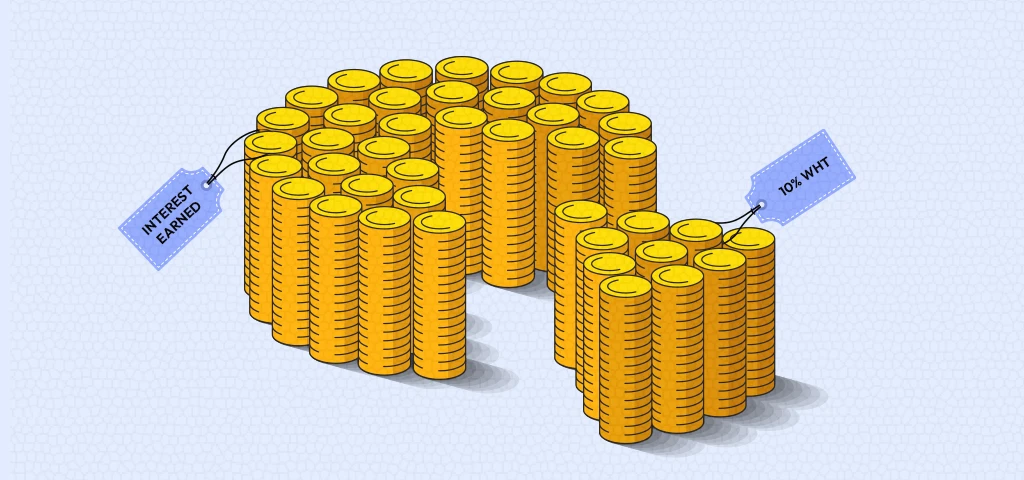
The Federal Inland Revenue Service (FIRS) now applies a 10% withholding tax to interest earned on certain short-term investment instruments, including Treasury Bills, Commercial Papers, and Corporate Bonds.
What does this look like in practice?
If your investment earns ₦100,000 in interest, ₦10,000 is deducted as tax, and you receive ₦90,000. This does not mean your investment is underperforming. It simply means returns are now calculated after tax.
Does this affect you even if you don’t invest directly in these instruments?
No, it does not. Our mutual funds, including money market and fixed income funds, already present returns net of tax. This means the impact of any applicable taxes is already reflected in the rates you see.
So, if you invest through our mutual funds, there is no additional deduction to your returns as a result of this change.
What should you keep in mind?
- Your investment is still working as expected
- Returns should now be viewed on an after-tax basis
- A lower payout reflects the tax deduction, not weaker performance
Is there anything you need to do?
No immediate action is required. However, if you invest directly in Treasury Bills or similar instruments and have not provided your Tax Identification Number, you should do so.
You may also take this opportunity to review your after-tax returns or speak with your advisor if you would like a clearer picture of how this applies to your portfolio.
The rules have changed slightly, but the goal remains the same. Understanding how your returns are calculated puts you in a stronger position to make informed financial decisions.